Bioprinting of collagenous bioinks
Biological tissues are characterized by intricate 3D patterns of cells and extracellular matrix, which are challenging to replicate using traditional tissue culture methods. Bioprinting offers a promising avenue for generating in vitro tissues with high geometric realism for pathophysiological modeling and regenerative medicine. However, a significant hurdle lies in developing bioprinting techniques and bioinks that can properly balance printability with cell viability. Physiological materials, such as collagen I, are ideal bioinks for promoting bioactivity but present considerable printing difficulties due to their slow gelation kinetics. This can lead to bioink diffusion and sedimentation, compromising patterning accuracy and shape fidelity of the printed structure. Although several existing techniques enable controlled collagen fabrication, many rely on the use of chemical modification or crosslinking strategies that introduce cytotoxicity concerns, or require high-concentration acidic collagen to achieve print fidelity, which narrows their broader applicability. Consequently, the rapid and precise patterning of cell-laden physiological inks with highly tunable features remains a critical challenge for advancing tissue and organoid engineering.
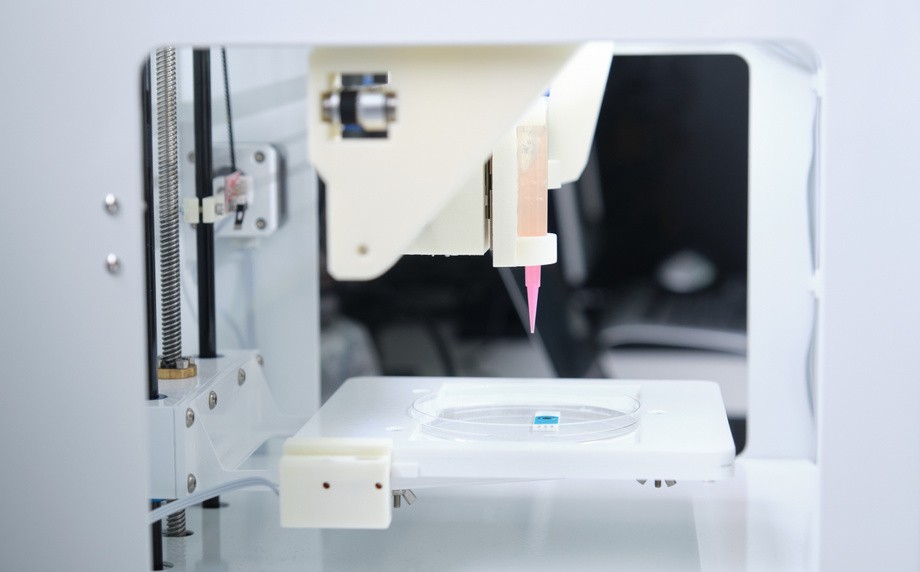
Researchers at Stony Brook University and Yale University developed a method, named TRACE (Tunable Rapid Assembly of Collagenous Elements), for bioprinting physiological materials. TRACE delivers the bioink into a macromolecular crowding bath, which accelerates collagen gelation and enables rapid and precise 3D patterning of structures. The versatile technique is tunable and enables printing with a broad range of physiological bioinks, including both low- and high-concentrations of collagen, as well as acidic and neutralized formulations. TRACE eliminates previous restrictive requirements needed to print collagen-based bioinks, and enables biofabrication of physiologically functional tissues using unmodified collagen-based and cell-laden bioinks.
https://stock.adobe.com/uk/422790290
- Enhanced printability of unmodified collagen
- Rapid and tunable gelation
- Improved cell viability and functionality
- Versatile tissue architecture fabrication
- Enhanced mechanical properties
- Regenerative Medicine and Tissue Engineering
- Advanced Tissue Models for Drug Screening and Development
- Tissues for Disease Modeling
- Realistic Surgical Training and Simulation Models
- Cosmetic Testing
Utility Applications Filed (18/317,526)
Utility Applications Filed (18/653,162)
Prototype Available
Available
Development partner - Commercial partner - Licensing
Patent Information:
| App Type |
Country |
Serial No. |
Patent No. |
Patent Status |
File Date |
Issued Date |
Expire Date |
|