Chemical Strategies for Improving Performance of Electrode Materials for Batteries
The demand for high-performance lithium-ion batteries is currently limited by the inherent trade-offs between safety, capacity, and structural stability in conventional anode materials. While high-capacity candidates like magnetite suffer from severe volume fluctuations and mechanical pulverization during cycling, safer alternatives such as spinel lithium titanate are plagued by poor intrinsic electronic conductivity and sluggish ion diffusion. Although researchers have attempted to mitigate these issues by employing nanostructuring and incorporating conductive additives like carbon nanotubes, existing integration techniques—including physical sonication and covalent anchoring—often fail to establish robust, low-resistance interfaces. These conventional methods frequently lead to the degradation of hierarchical structures or insufficient electrical connectivity, preventing the materials from withstanding the mechanical stresses of repeated lithiation and hindering the achievement of optimal high-rate electrochemical performance.
Researchers at Stony Brook University developed a lithium-ion battery anode material consisting of a 3D nanocomposite where active nanostructures, specifically hierarchical flower-like lithium titanate microspheres or 8–10 nm magnetite nanoparticles, are anchored to multi-walled carbon nanotubes. The integration utilizes 4-mercaptobenzoic acid as a linker to establish non-covalent pi-pi interactions, or (3-aminopropyl) triethoxysilane for covalent bonding, creating stable molecular junctions between the components. These structural configurations provide shortened ion diffusion paths and high surface areas for electrolyte interaction while maintaining electrical connectivity during the volume changes associated with lithiation and delithiation. By combining a conductive carbon scaffold with precisely anchored active materials, the composite reduces charge transfer resistance and enhances the mechanical stability of the electrode.
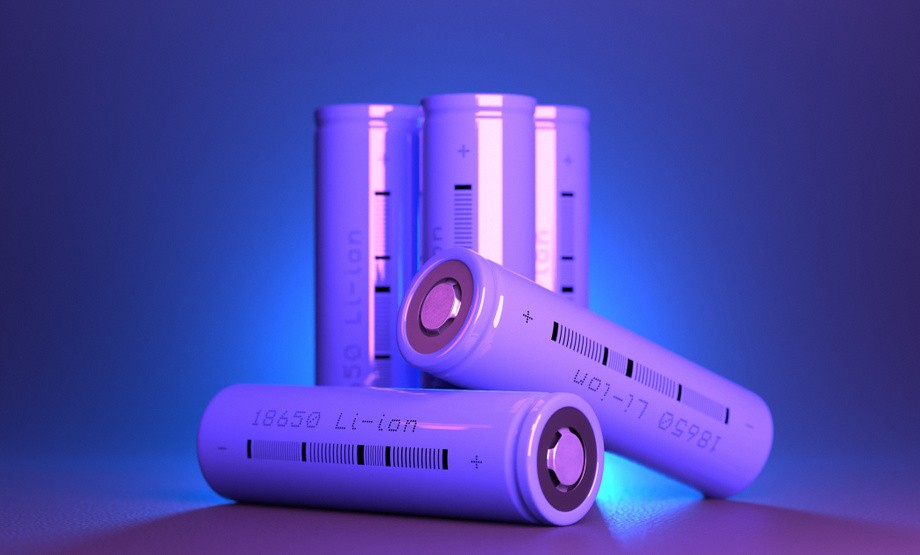
hodim, stock.adobe.com/uk/497300209, stock.adobe.com/
- Enhanced cycling stability
- Improved electronic conductivity
- Reduced charge transfer resistance
- Enhanced lithium-ion diffusion rates
- Higher reversible capacity
- Automotive Battery Manufacturing
- Consumer Electronics Battery Manufacturing
- Stationary Energy Storage Systems
- Industrial and Specialty Power Applications
Utility Application Filed (11,056,685, 11,349,117, 12,142,754)
Proof of Concept
Available
Development partner - Commercial partner - Licensing
Patent Information:
| App Type |
Country |
Serial No. |
Patent No. |
Patent Status |
File Date |
Issued Date |
Expire Date |
|