Fluorescent Peptides for Membrane Tension Reporting and Biomarkers
A peptide-based probe technology that enables real-time, non-invasive fluorescent detection and quantitation of cell membrane tension.
The 2021 Nobel Prize in Physiology or Medicine was awarded for the discovery of Piezo channels, mechanosensitive ion channels that respond to cell membrane tension, translating mechanical force directly into electro-chemical signals. Piezo channels are involved in many normal physiological processes including sensing of touch, nociception, proprioception, control of cell volume and blood pressure, sensing fullness via stretch reception in the intestine and bladder, maintenance and remodeling of bone, epithelial and vascular tissues. They are also implicated in pathologies like cancer metastasis and Alzheimer’s Disease. Despite considerable interest in these diseases and molecular pathways, research has historically been limited to highly technical biophysical labs due to the need for complex, low-throughput electrophysiology for monitoring channel activity, and advanced microscopy methods such as FLIM and FRET for measurement of membrane tension.
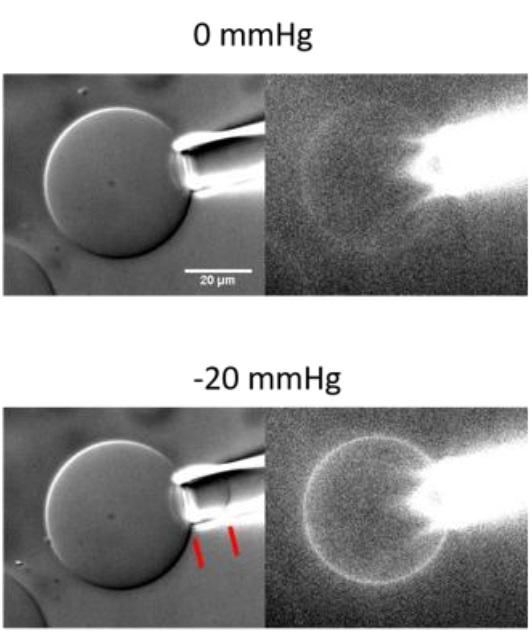
This novel peptide probe developed by University at Buffalo researchers is a fluorescent analog of the non-toxic inhibitor of Piezo channels, GsMTx4. It takes advantage of the well-defined tension-dependent mobility of the peptide in membranes to provide a quantitative measure of membrane tension that can be measured via simple visible light fluorescence microscopy without the need for advanced hardware or complex biophysical or microscopy techniques. With increasing tension in lipid bilayers, the probe penetrates more deeply into the hydrophobic environment of the membrane, increasing the quantum yield and brightness of attached fluorophores. A major advantage of this peptide over existing probes is that its sensing occurs in the dynamic range of the native Piezo channel and at non-inhibitory concentrations, enabling a proxy measure of Piezo activation. The probes are also simple to manufacture and are expected to be dramatically more cost effective than existing market technologies for membrane tension reporting.
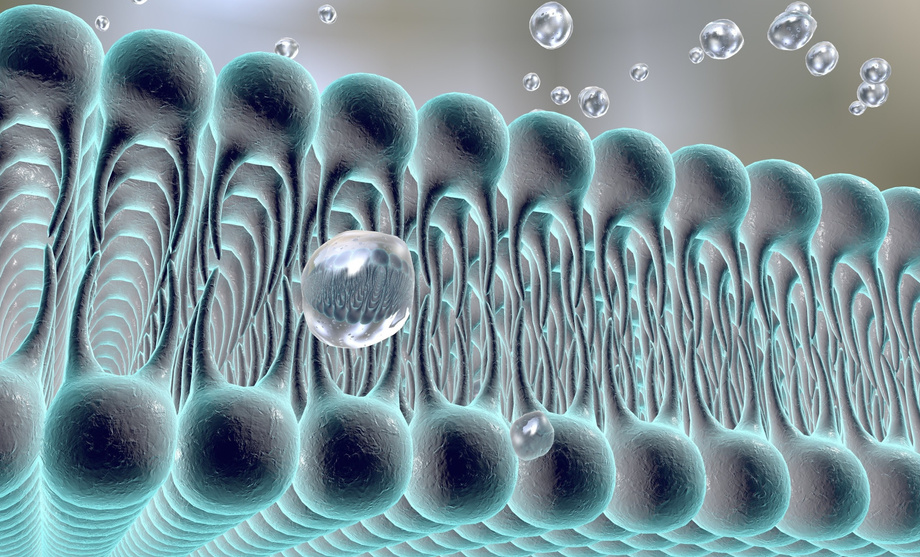 Please note, header image is purely illustrative. Source: Kateryna_Kon, Adobe Stock.
- Real-time high-throughput monitoring of membrane tension
- Sensitive to membrane tension relevant to normal physiology
- Simple and cost effective
- Non-invasive - sensitive detection at concentrations that don’t interfere with Piezo channel function
- Compatible with two-photon microscopy for deep tissue imaging
- Cell biology research for processes that involve membrane dynamics, e.g. wound healing, viral infection, endocytosis and membrane trafficking, cell motility, cancer invasion and metastasis
- Membrane dynamics readout for high-throughput drug screening
- Assays for liposome / LNP size and composition
Provisional patent application filed.
- Proof of concept, biophysics validation
- TRL 3
Available for licensing or collaboration
Development partner – Commercial partner – Exclusive or non-exclusive
BioRxiv article available here
 ©2025, Research Foundation for the State University of New York
Patent Information:
| App Type |
Country |
Serial No. |
Patent No. |
Patent Status |
File Date |
Issued Date |
Expire Date |
|