These smart glasses use AI and augmented reality to recognize faces and emotions, then translate this information into intuitive tactile signals, helping visually impaired users navigate and interact socially with less cognitive effort and at lower cost.
The field of assistive technology for visually impaired individuals has seen significant advancements in recent years, particularly with the integration of digital and wearable solutions. People with visual impairments often face substantial challenges in navigating their environments and engaging in social interactions, as they must rely heavily on non-visual senses such as hearing and touch. This reliance can lead to increased cognitive load, making everyday tasks more mentally taxing and potentially overwhelming. The need for more intuitive, effective, and affordable assistive devices is pressing, as these technologies can play a crucial role in fostering independence, enhancing spatial awareness, and improving quality of life for visually impaired users. Despite the availability of various assistive devices—such as audio-based navigation apps, smart canes, and visual recognition tools—current approaches have notable limitations. Many solutions primarily provide auditory cues, which can easily become overwhelming in noisy environments or when multiple streams of information must be processed simultaneously. Others offer limited tactile feedback that does not fully substitute for the loss of visual input, leaving gaps in users’ ability to perceive and interpret their surroundings. Moreover, existing technologies often fall short in supporting nuanced social interactions, such as recognizing faces or interpreting emotions from a distance, which are vital for meaningful engagement and inclusion. Cost is another barrier, as advanced commercial devices can be prohibitively expensive, restricting access for many who could benefit from them.
The technology is a wearable smart glasses system that uniquely combines haptic feedback with AI-powered visual modules and augmented reality (AR) capabilities to assist visually impaired users. The smart glasses use an advanced AI module for face registration and recognition, enabling the identification of individuals and the interpretation of their emotional states. This information, along with environmental and spatial cues, is translated into intuitive tactile signals delivered through the haptic interface embedded in the glasses. By converting complex visual and social information into easily understood haptic feedback, the system aims to reduce cognitive load, enhance navigation, and improve spatial awareness. The design is also cost-effective, making it a practical alternative to more expensive commercial assistive devices. What differentiates this technology is its holistic approach to sensory replacement and cognitive relief for visually impaired users. Unlike existing solutions that rely primarily on audio cues or offer limited tactile feedback, this system provides a comprehensive sensory interface by integrating AI-driven visual analysis, emotional recognition, and AR with haptic communication. This allows users to receive critical information about their environment and social interactions without being overwhelmed by multiple audio streams or visual displays. Intuitive haptic feedback not only supports navigation but also empowers users to engage more confidently in social settings, addressing a major gap in current assistive technologies. Its affordability and multifunctionality further position it as a transformative solution in the field of assistive wearables.
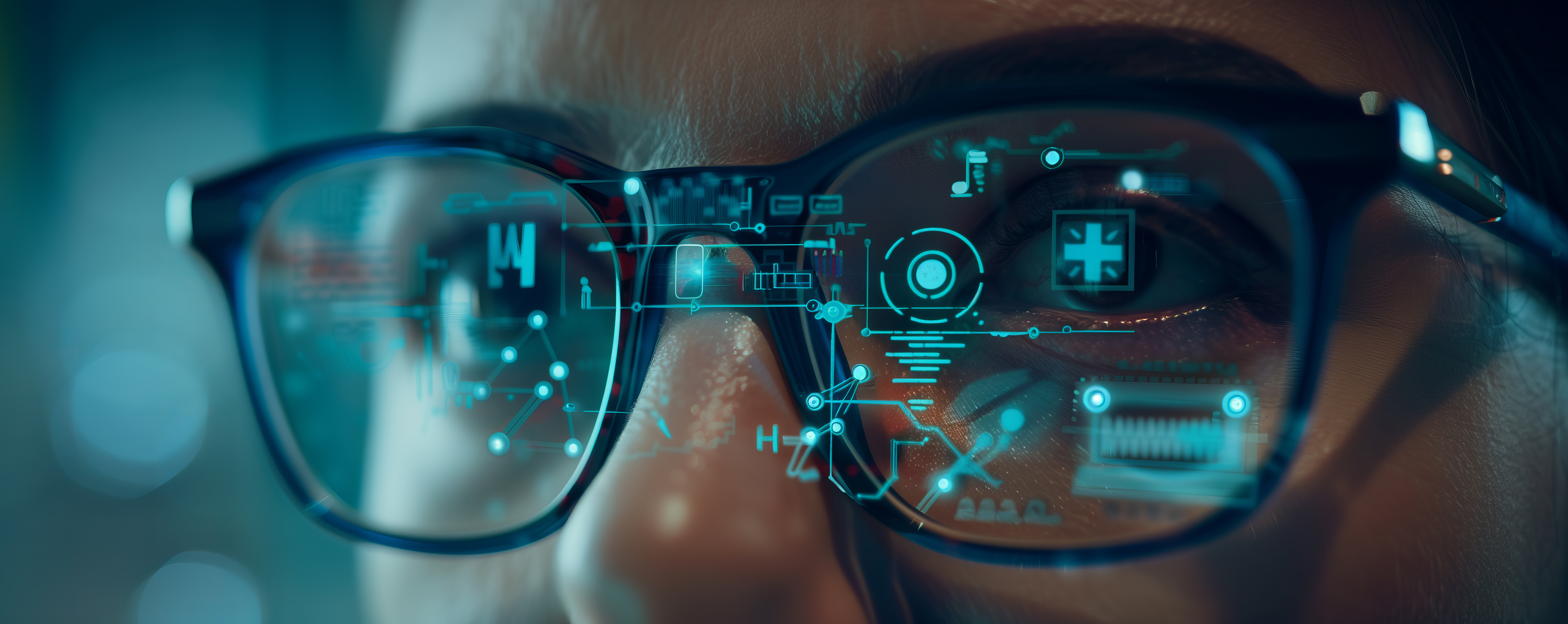 Photo for reference only, not a depiction of the invention.
• Reduces cognitive load for visually impaired users by translating visual and social information into intuitive haptic feedback
• Enhances social interaction through AI-powered face recognition and emotion interpretation
• Improves navigation, perception, and spatial awareness with integrated augmented reality capabilities
• Provides a wearable, hands-free assistive solution in the form of smart glasses
• Offers a cost-effective alternative to existing commercial assistive devices
• Supports greater independence and empowerment for visually impaired individuals
• Assistive navigation for the visually impaired
• Social interaction enhancement for blind users
• Emotion recognition in public spaces
• Augmented reality guidance for accessibility
Patent pending
TRL 3
This technology is available for licensing.