Quantum Contingency Scanning for Power System Security
Modern power grids face rising complexity from renewable energy and extreme climate events. Maintaining Steady-State Security requires "Contingency Analysis" (CA)—simulating thousands of "what-if" failure scenarios (N–k contingencies). Classical computers scale linearly, creating a massive bottleneck where simulations cannot keep up with real-time grid changes. This necessitates a shift from reactive security to proactive, quantum-accelerated assessment.
This invention introduces a Quantum Contingency Analysis (QCA) framework that moves power flow analysis from a serial process to a parallel one.
Quantum Parallelism: Uses a Variational Quantum Linear Solver (VQLS) to represent grid states as wavefunctions, allowing qubit requirements to scale logarithmically rather than linearly.
Error Mitigation: Employs a "triple-threat" strategy—Pauli-twirling, Dynamic Decoupling, and Matrix-free Measurement—to ensure accurate results on today’s "noisy" (NISQ) quantum hardware.
Hybrid Architecture: A classical CPU handles optimization loops and "pre-calculations," while the Quantum Processing Unit (QPU) executes the high-heavy parallel simulations.
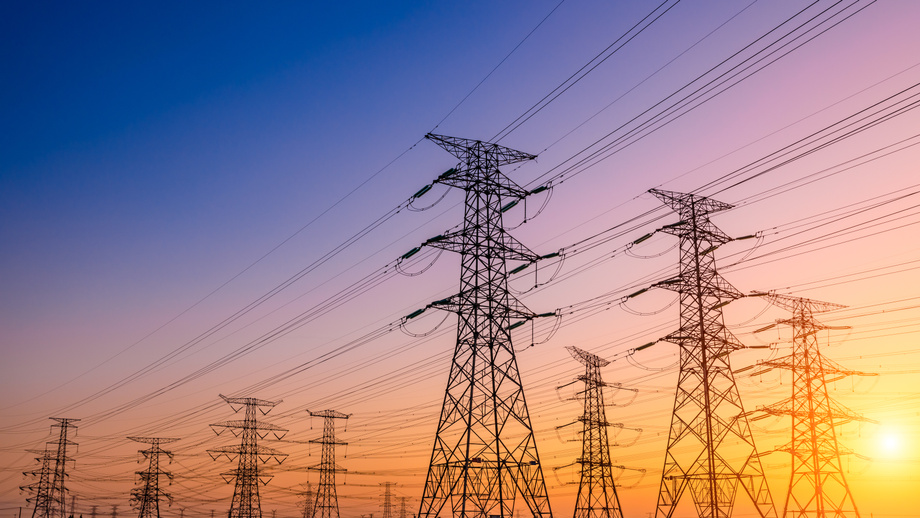 Source: ABCDstock, https://stock.adobe.com/uk/299237262, stock.adobe.com
- Exponential Scalability: Leverages superposition and entanglement to analyze multiple outage scenarios simultaneously, providing a massive speed advantage over sequential classical methods.
- Computational Efficiency: Reduces the overhead of extensive matrix computations by encoding linearized power flow equations directly into quantum circuits.
- Resource Savings: Dramatically lowers the hardware requirements for large-scale systems (representing N scenarios with only log_2 N qubits).
- High Fidelity: Achieves accuracy comparable to Classical Contingency Analysis (CCA) while maintaining the potential for quantum speedup as hardware matures.
- Utility & Grid Planning: Real-time resilience scanning and vulnerability identification for modern power grids.
- Critical Infrastructure: National security tools to protect power networks against cascading failures or external threats.
- Mission-Critical Facilities: Ensuring zero-downtime for microgrids in hospitals, military bases, and data centers.
- Complex Networks: Managing systemic risks in telecommunications (6G), global logistics, and transportation infrastructure.
Patent Pending
In Silico
Stony Brook University is seeking an industry partner to license and commercialize the technology.
Commercial partner - Licensing
Additional Information:
Patent Information:
| App Type |
Country |
Serial No. |
Patent No. |
Patent Status |
File Date |
Issued Date |
Expire Date |
|